Predator Free Wellington
  • Our project
    • Our project
    • News
    • FAQs
    • Knowledge hub
    • Meet our team
    • Our impact
    • Our progress
    • Our supporters
    • Contact us
    • Impact dashboard
  • Sign up – Phase 2
    • Phase 2
    • Phase 2 volunteering
  • Miramar
  • Trapping
    • Find a trapping group
    • Community heroes
    • Knowledge hub
  • Support us
  1. Home
  2. Trapping
  3. Te Motu Kairangi - Miramar Ecological Restoration

Te Motu Kairangi - Miramar Ecological Restoration

About us

Te Motu Kairangi - Miramar Ecological Restoration logo

We aim to restore ecological health to the Miramar Peninsula. More specifically, we’d like to see every household on the peninsula include 25% or more local native plants. We practise eco-sourcing to maintain the distinctiveness of local flora. We also undertake trapping in reserves across the Miramar Peninsula.

The sea and the airport form effective barriers around the Miramar Peninsula so, once a pest is removed, reinvasion is limited. This means our Peninsula could become a beautiful, safe ecological island.

The Peninsula is a wildlife stopover on a natural corridor running from the Remutaka Ranges and East Harbour Regional Park, over to Matiu/Somes Island and further west to the Botanic Gardens, Zealandia Te Māra a Tāne and Ōtari-Wilton’s Bush. By boosting rare plant life and controlling pests we can bring nature in to our urban community, raising property values and fostering a sense of identity and well-being.

As well as getting our hands dirty we inspire, enable and support local residents like you – because together we can truly transform our Peninsula.

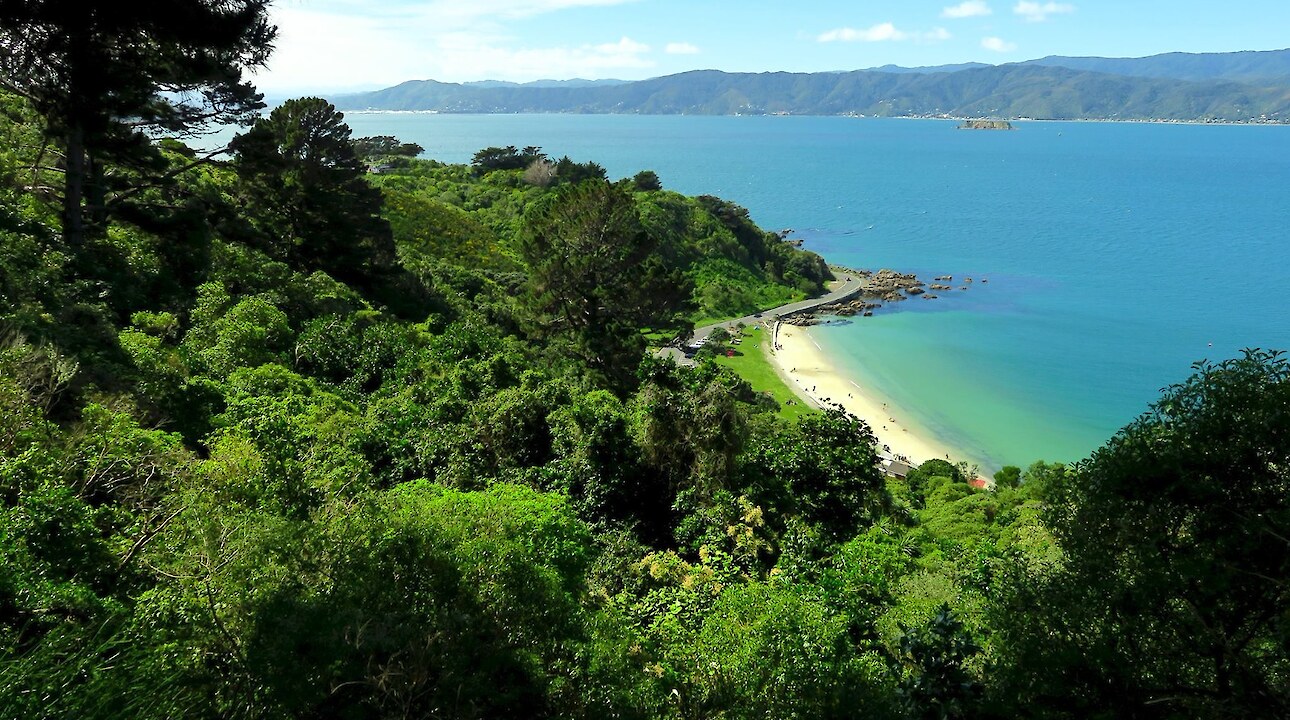
A peninsula is a great place to appreciate the connection between land and sea. The primary goal is to restore the Peninsula to a more complete, healthy, living ecosystem, and also to reconnect local people with their natural environment, reintroduce lost flora and boost populations of locally rare or threatened species.

We aim to recreate a more extensive and diverse coastal forest and to extend this into gardens and backyards as well to attract a wider range of native birds and other fauna back to the Peninsula.

Volunteer specialist skills includes: horticulturist, weed management and revegetation consultant, pest control, community engagement etc.

The Miramar community is a special one, where many people are connected to each other in a neighbourly way. The unique environment of natural scenery, beaches, world class cafes and restaurants and some of the best filmmakers in the world has attracted a diversity of people from around the world to Miramar. The beaches of the peninsula are a stroll away, and the bush reserves of Miramar provide a natural sanctuary from the city – while still offering the best views of the coolest little capital.

Our area

Photos

Contact

Joakim Liman

E [Enable JavaScript to view protected content]

W temotukairangi.co.nz

  • Facebook
  • YouTube
  • Facebook
  • Instagram
  • LinkedIn
  • Contact us
  • Receive our newsletter

© 2026 Predator Free Wellington • Privacy statement • Website by RS

  • Home
  • Our project
    • Our project
    • News
    • FAQs
    • Knowledge hub
    • Meet our team
    • Our impact
    • Our progress
    • Our supporters
    • Contact us
    • Impact dashboard
      • Native birds are closing the gap on introduced birds on Miramar Peninsula
      • Measuring economic impact
      • Social outcomes emerging from Predator Free Wellington
      • Why Predator Free Wellington is built on community partnership
  • Sign up – Phase 2
    • Phase 2
    • Phase 2 volunteering
  • Miramar
  • Trapping
    • Find a trapping group
    • Community heroes
    • Knowledge hub
      • Our urban predator free blueprint (2024)
      • Most Significant Change (2025)
      • Return on investment (2025)
      • The value of volunteers (2024)
      • Habitat preferences of Ship rats (2023)
      • Social-ecological research (2022)
      • People, nature and wellbeing (2020)
      • Predator Free Miramar: How to kill rats and engage a community (2019)
      • Biosecurity: Rat or mouse?
      • Biosecurity: Rat or wētā droppings?
      • Biosecurity: Chew marks and chew cards
      • Biosecurity: Tracking tunnels and prints
      • How to get trapping (guide)
      • How to build a trapping tunnel
      • How to rat proof your compost
      • How to make a wētā hotel
      • How to build a corflute trapping tunnel
      • H2Zero trial – case study
      • Improving our biosecurity – case study
      • Using dog detectors early – case study
      • How to maintain your Victor rat trap
      • How to run a tunnel building workshop
      • Conceiving an unfenced urban ecosanctuary at Mātai Moana (2024) – external link
      • Estimating the impact of Predator Free Wellington on tree wētā (2025) – external link
      • Assessing the effects of predator control and habitat on lizards in an urban landscape (2025) – external link
      • Webinar - Analysis of Predator Free Wellington data from Miramar (2024)
  • Support us
  • Facebook
  • Instagram
  • LinkedIn
  • Newsletter signup
  • Search...